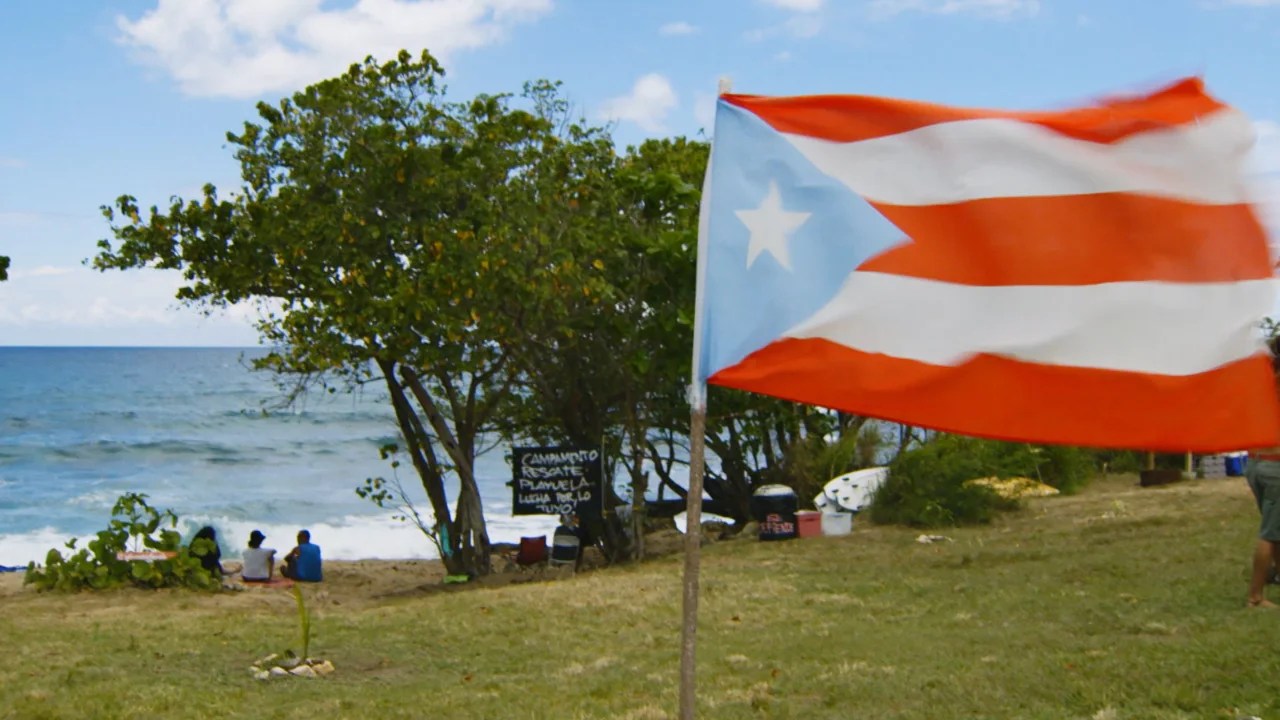
Though it has been law since 1917, the nature of US citizenship for those born in the US territory of Puerto Rico has always been murky.Puerto Ricans could serve in the US armed forces, but were denied the right to vote for president; the island is a territory of the US, but has never been a strong candidate for incorporation.
n 2017, after Hurricane Maria devastated the island, Puerto Rico was almost an afterthought, receiving considerably less aid from the Federal Emergency Management Agency (FEMA) than Texas and Florida did for Hurricane Irma — and at a much slower pace. It was as if the US government forgot that Puerto Ricans were American citizens.
Recently, two incidents involving the car rental company Hertz and airline carrier Spirit have shown that Puerto Ricans’ US citizenship can be questioned and their sense of belonging can feel fleeting and arbitrary.
On May 9, Humberto Marchand, a former US federal probation employee, was denied a car rental by a Hertz agent at the Louis Armstrong New Orleans International Airport because she did not believe Marchand’s drivers’ license, a REAL-ID issued in Puerto Rico was valid, and asked him to provide his passport. Despite the fact that Marchand, who traveled to New Orleans to help his son move out of an apartment, had prepaid for his rental, he was turned away by the agent, who eventually called the police to the scene. The officer then accused Marchand of creating a disturbance, according to the body-cam video released by the Kenner Police Department and first obtained by Fox 8 New Orleans. Hertz later apologized to Marchand and refunded his rental. “We are reinforcing our policies with employees to ensure that they are understood and followed consistently across our locations,” the company said.
Kenner Police Chief Keith Conley apologized and said Marchand shouldn’t have been spoken to in that manner. Conley added the department is investigating the incident.
Two weeks earlier, Luis and Marivi Román Torres, a married Puerto Rican couple, were returning to the island from Los Angeles on a Spirit Airlines flight. But they were not allowed to board because their two-year-old son did not have a passport. They had already produced their Puerto Rico drivers’ licenses, which were incorrectly rejected. Despite having shown their US passports, they were told that their flight home was an “international flight,” and were offered a refund or the ability to reschedule the flight once their infant had obtained a passport. They ultimately booked a flight on JetBlue at a much higher price. Spirit Airlines apologized to the family and said the agent, who was new to the position, misunderstood the situation and was being provided “additional coaching.”
But these incidents — as well as incidents in the past, when Puerto Ricans have been threatened with deportation despite being American citizens — show there’s a major problem. The confusion among much of the US public over Puerto Rico’s status as an unincorporated territory has reinforced the idea that Marchand, and many other Puerto Ricans, regard as a “second-class citizenship” whose validity is continually open to interpretation or challenge. It doesn’t help that the long-standing inability of the US Congress to pass an immigration reform law has in part contributed to the rise of anti-immigrant sentiment and the demonization of Latin American migrants and their descendants, creating an atmosphere where anyone with a Spanish last name or “Hispanic” appearance can be vulnerable to having their citizenship status questioned.
Puerto Rico has an ambiguous relationship with the US. While everyone born on the island are citizens, they don’t have full citizenship rights unless they live on the mainland, where they can vote for elected representatives in the US Congress, as well as vote for president. Those living on the island territory do not have full constitutional protections or full entitlement to federal benefits. Annual federal Medicaid funding is capped and requires special legislation from Congress to ensure its funding. Last year, in US v. Vaello-Madero, the US Supreme Court ruled that Congress can exclude residents of Puerto Rico from some disability benefits available to those living in the United States.
Puerto Rico’s “commonwealth” status, which aimed to give the island a measure of control over its internal affairs while allowing its residents to enjoy this limited US citizenship, has also been called into question by Supreme Court rulings. In both Puerto Rico v. Sanchez-Valle and Puerto Rico v. Franklin California Tax-Free Trust, both ruled on in 2016, it was established the commonwealth has no power independent of Congress. The latter case, which denied Puerto Rico the ability to create its own municipal bankruptcy code, paved the way for the Puerto Rico Oversight, Management, and Economic Stability Act (PROMESA) in 2016, which aims to restructure the territory’s more than $70 billion debt, providing the Fiscal Oversight and Management Board, an instrument of Congress, with complete control over the island’s finances. The board was appointed in 2016 by then-President Barack Obama after he signed the bill into law.
Ironically, in view of Puerto Rico’s lack of sovereignty as an unincorporated territory, the Supreme Court ruled on May 11 that the same Fiscal Oversight and Management Board had sovereign immunity, giving it the right to withhold information from Puerto Rico’s Center for Investigative Journalism. The ambiguous nature of Puerto Rico’s relationship, when its residents can only enjoy full citizenship rights while residing in the 50 states, when it can be considered a “state” and not a municipality for the purposes of bankruptcy law, is captured by a couple of phrases that came from early 20th century Supreme Court decisions known as the Insular Cases: Puerto Rico is in the state of “belonging to, but not a part of” the United States. It is “foreign, in a domestic sense.”
While Puerto Ricans have begun to emerge from stereotypical portrayals made famous by 1960s movies like “West Side Story” and “The Young Savages,” there is still a lack of representation in news and entertainment media, along with little clarity on our place in the US. Recent book bans in states like Florida, including books about Puerto Rican descendant Supreme Court Justice Sonia Sotomayor and baseball legend Roberto Clemente don’t do much to sustain a sense of belonging. It’s as if Puerto Rico and Puerto Ricans have no history or presence.
Even the Supreme Court, in an opinion written by Justice Neil Gorsuch, and agreed with by Sotomayor, has recently expressed doubt about the exclusionary nature of the Insular Cases, which affect all 13 unincorporated territories of the US. But they remain in effect, and the citizenship status of Puerto Ricans remains vague, despite the unambiguous Jones Act that granted it in 1917. Congress’ most recent attempt to clarify Puerto Rico’s standing, the Puerto Rico Status Act, has an unclear future, especially since the Republicans regained control of the House of Representatives in the 2022 midterm elections.
The Puerto Rican legislature voted unanimously for independence in 1914, but the US instead moved to grant all Puerto Ricans US citizenship in 1917 via the Jones Act. Since then, the independence movement in Puerto Rico has had a history of being repressed by governmental authorities, resulting in low voter preference for the Independence Party. In the 2020 elections, however, the party rose to 13.6% – just last month, the Independence Party has entered into an alliance with theMovimiento Victoria Ciudadana, which received almost 14% of the vote, in a move that could affect Puerto Rico status politics in the future.
But with Puerto Rico’s debt restructuring in progress, and its once-devalued bonds beginning to return to the bond market, the island is facing an onslaught of wealthy US real estate investors buying up ocean front property and distorting its real estate market. But while a new class of wealthy Americans freely take up space in Puerto Rico, Puerto Ricans continue to have their citizenship status questioned in the United States. It’s an injustice that continues to be endured by the 3.2 million residents of the island (and by residents living on the mainland), and action by Congress and the Supreme Court to address it seems remote at best.
Originally published in CNN Opinions on May 28, 2023
RELATED

 ED MORALES